
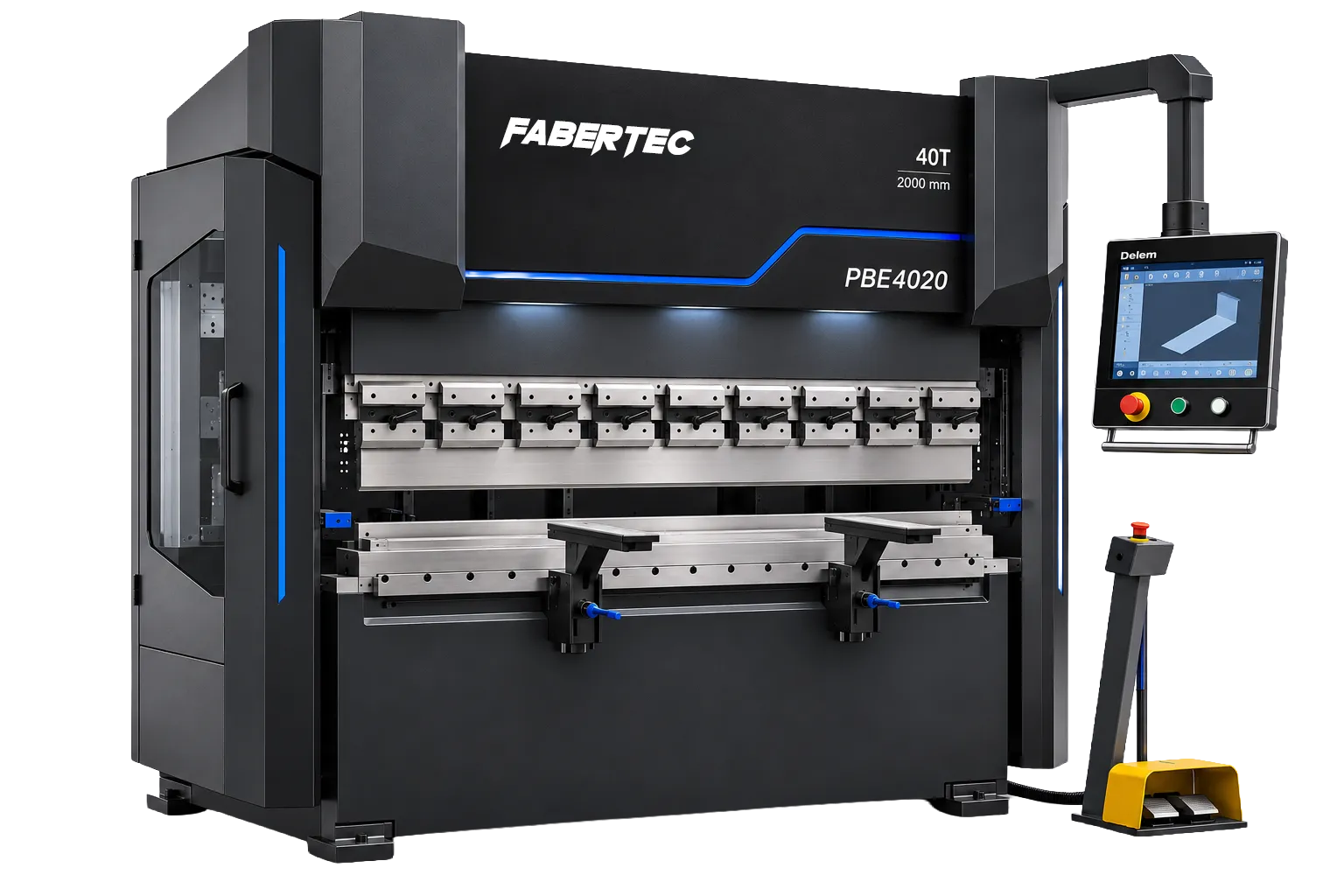
The Fabertec PBE Series is a range of fully electric CNC press brakes for light and medium sheet-metal fabrication. Designed for parts such as brackets, channels and enclosure panels, the PBE uses electric servo motors to drive the upper beam through a belt and ball-screw system. This provides a quiet bending operation without a hydraulic pump or hydraulic oil in the main drive.
The CNC backgauge positions the sheet for each bend, while the controller sets the travel of the upper beam. On a part such as a U-channel, the operator forms the first flange, turns the sheet and positions it for the second bend. The bend settings can then be reused for the remaining parts in the batch.
The PBE range includes different bending forces and working lengths. The right machine depends on the material grade, sheet thickness and length of the bend.
Fabertec Electric Press Brake
| Model | Bending force | Bending length | Purpose |
|---|---|---|---|
| PBE4016 | 40 tonnes / 400 kN | 1,600 mm | Compact model for light sheet-metal fabrication |
| PBE4020 | 40 tonnes / 400 kN | 2,000 mm | Longer-bed model for light fabrication |
| PBE8020 | 80 tonnes / 800 kN | 2,000 mm | Higher bending force for work on a 2 m bed |
| PBE8520 | 85 tonnes / 850 kN* | 2,000 mm | Proposed 85-tonne model for work on a 2 m bed |
| PBE8525 | 85 tonnes / 850 kN* | 2,500 mm | Proposed longer-bed model for bends up to 2.5 m |
*The 85-tonne rating is subject to factory certification. Final model availability is to be confirmed.
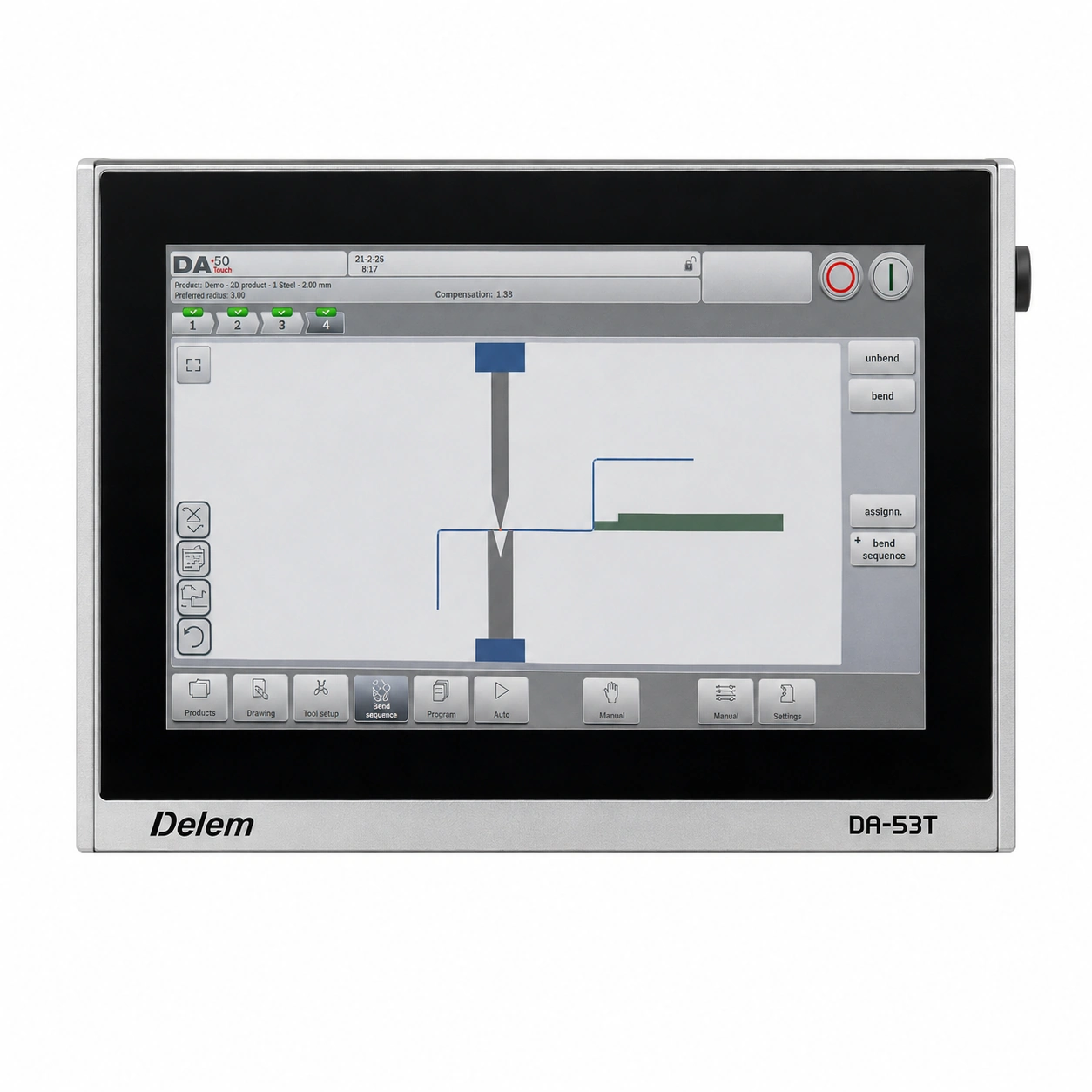
Delem DA-53T
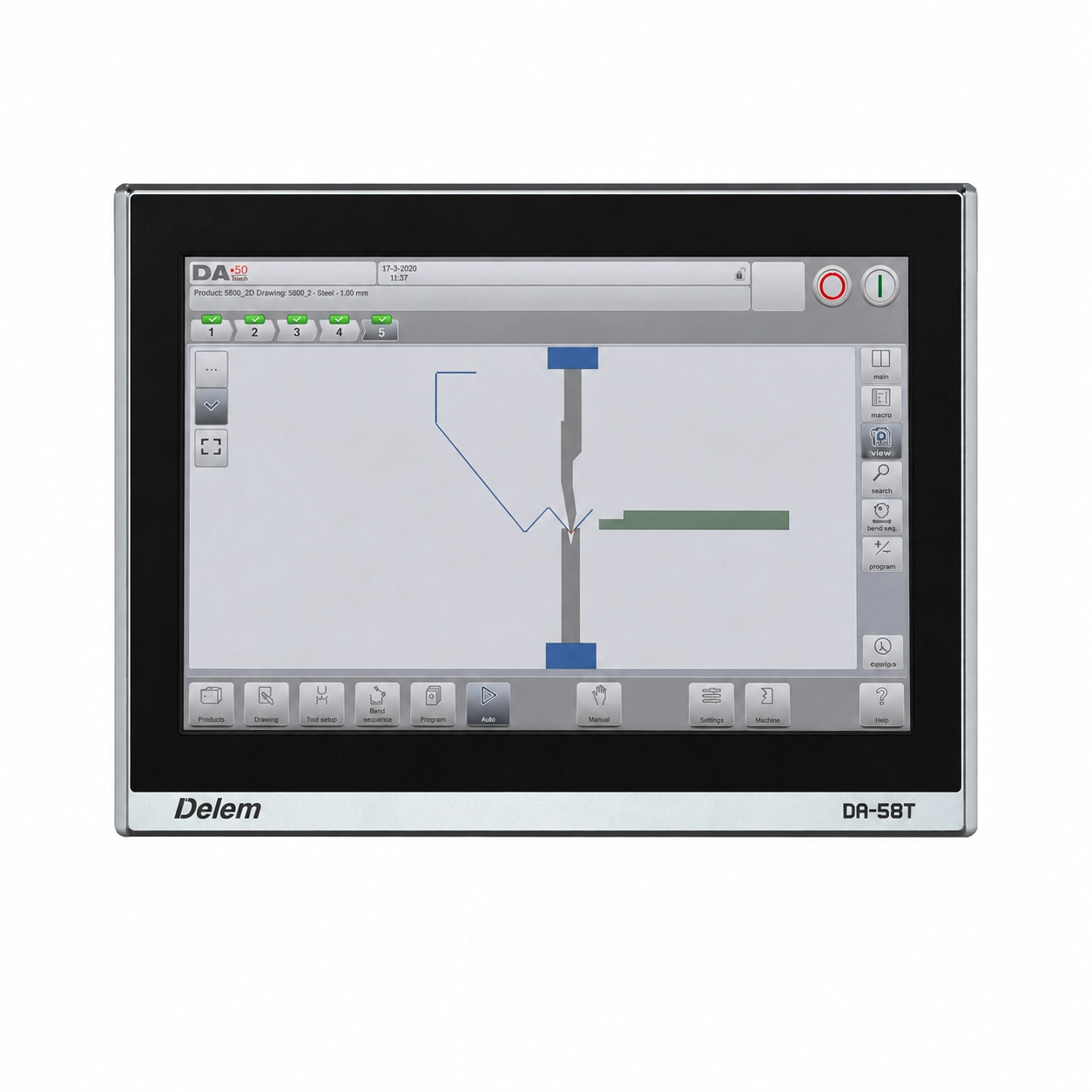
Delem DA-58T
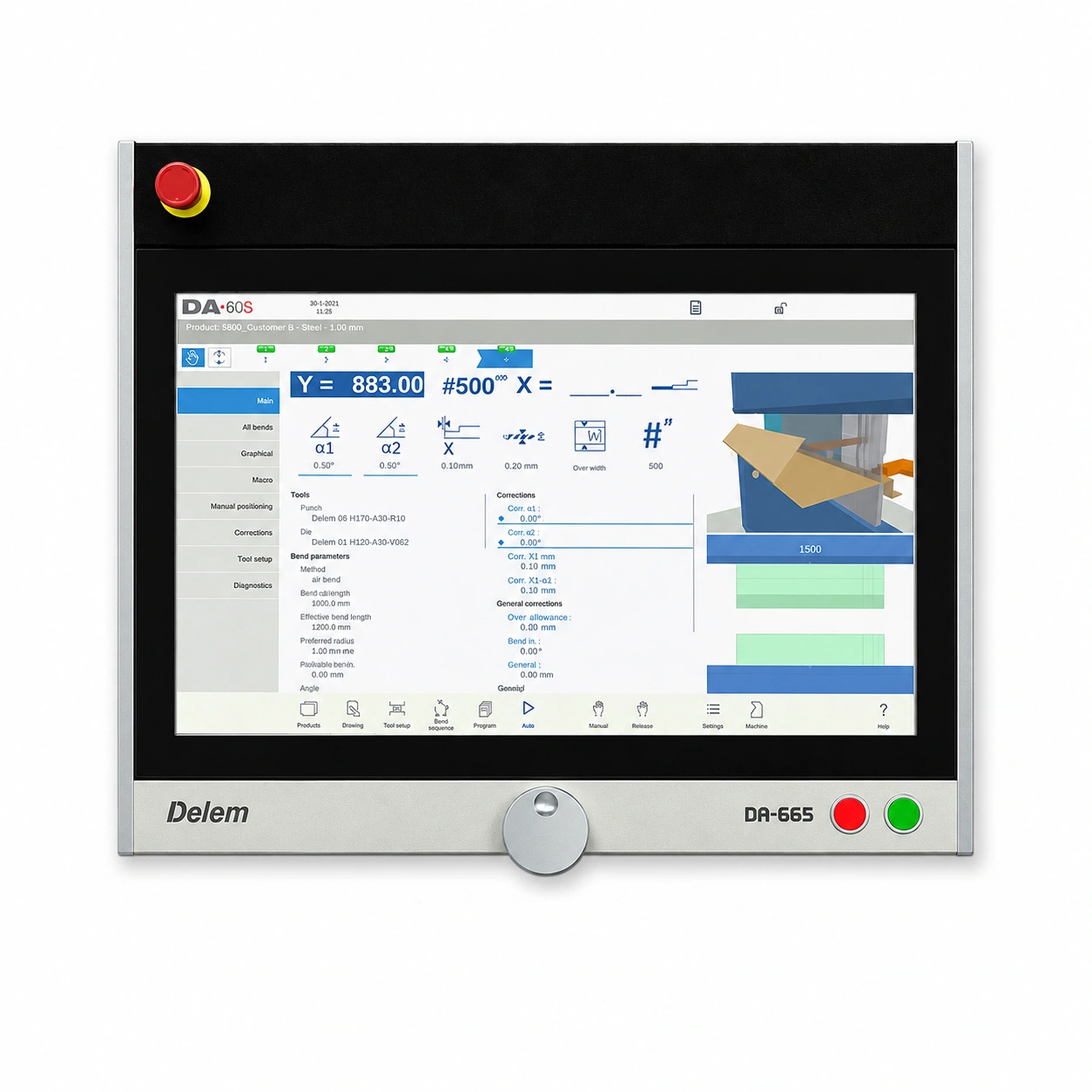
Delem DA-66S
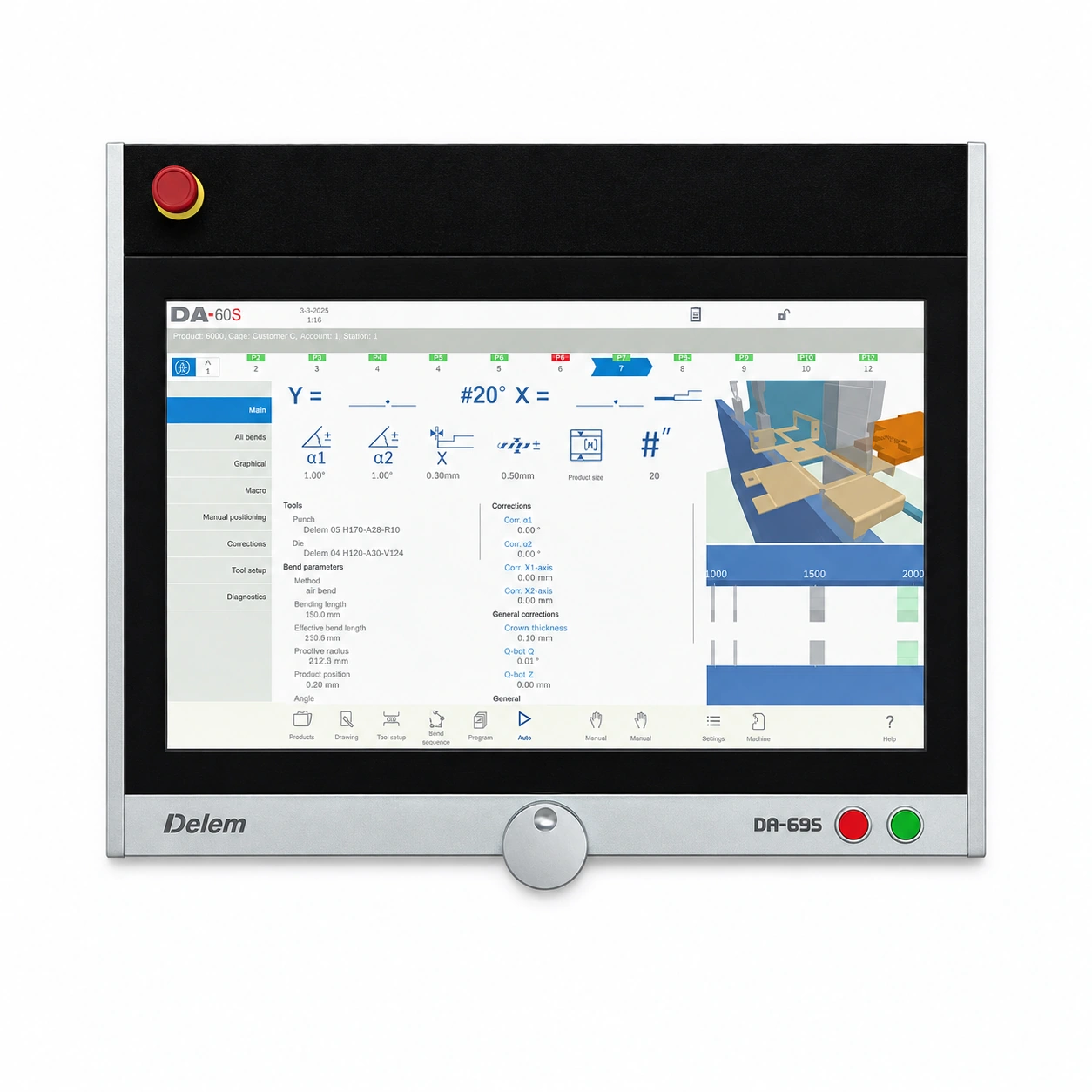
Delem DA-69S
Technical Specification
| Specification | PBE 40-tonne series | PBE 80–85-tonne series* |
|---|---|---|
| Bending force | 400 kN (40 tonnes) | 800 kN (80 tonnes) or 850 kN (85-tonne target) |
| Bending length | 1,600 mm or 2,000 mm | 2,000 mm, with a 2,500 mm version proposed at 85 tonnes |
| Ram stroke (target) | 250 mm | 250–300 mm |
| Daylight / maximum open height (target) | 550 mm | 550–650 mm |
| Throat depth (target) | 350–400 mm across the proposed PBE range | |
| Main drive | Electric servo drive with belt reduction and ball screws | |
*The 85-tonne rating is subject to factory certification. Final working dimensions are subject to confirmation for each model.
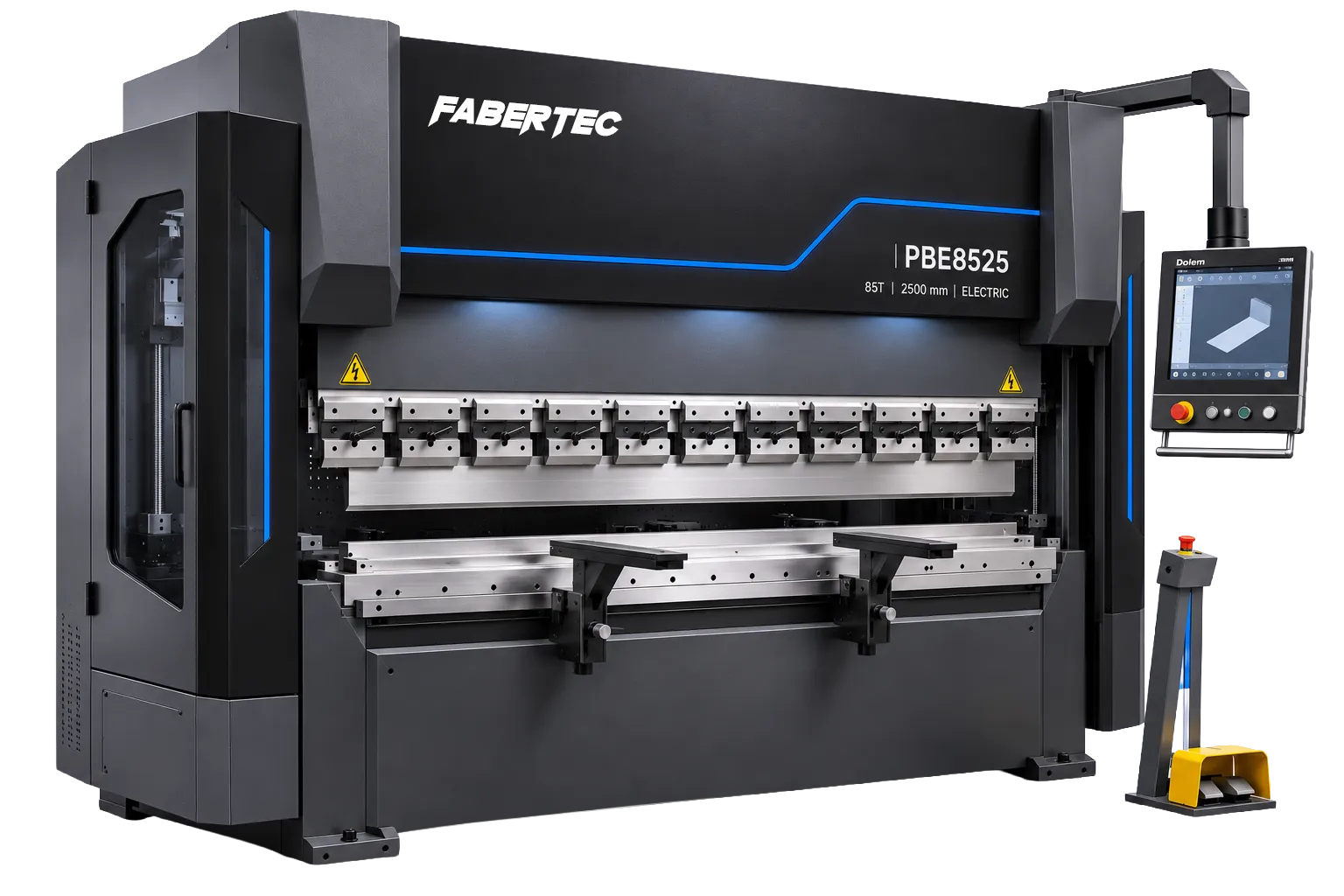
Backgauge and Tooling
The CNC backgauge positions the sheet for each bend. The X-axis moves the gauge fingers forwards and backwards to set the flange depth, while the R-axis adjusts their height. Optional Z1 and Z2 axes allow each finger to move sideways independently to suit the shape of the part.
European-style segmented tooling lets the operator combine tool sections to match the bend length. Quick-release clamps make punch changes easier. When forming a U-channel or return bend, a gooseneck punch can provide clearance for an edge that has already been folded.
For air bending, the width of the V-opening in the lower die affects both the inside bend radius and the shortest flange the machine can form. On parts with short flanges, it’s worth checking the flange length against the tooling chart for the chosen material thickness and die opening.